
The investment management sector in 2026 is experiencing a dramatic operational pivot. Driven by regulatory flexibility under SEC Chair Paul Atkins, investment firms are balancing rapid product innovation in private markets and digital assets with strategic shifts in SEC examination priorities. Succeeding in this landscape requires firms to adapt to extended regulatory compliance timelines while preparing internal compliance programs for highly targeted enforcement actions centered on direct investor fraud.
This analysis details the primary factors shaping the regulatory environment, highlights the areas of operational adjustment required for investment managers, and addresses key focus areas for risk mitigation.
2026 Investment Management Regulatory Outlook
The SEC Priority Pivot: Flexibility Meets Targeted Enforcement
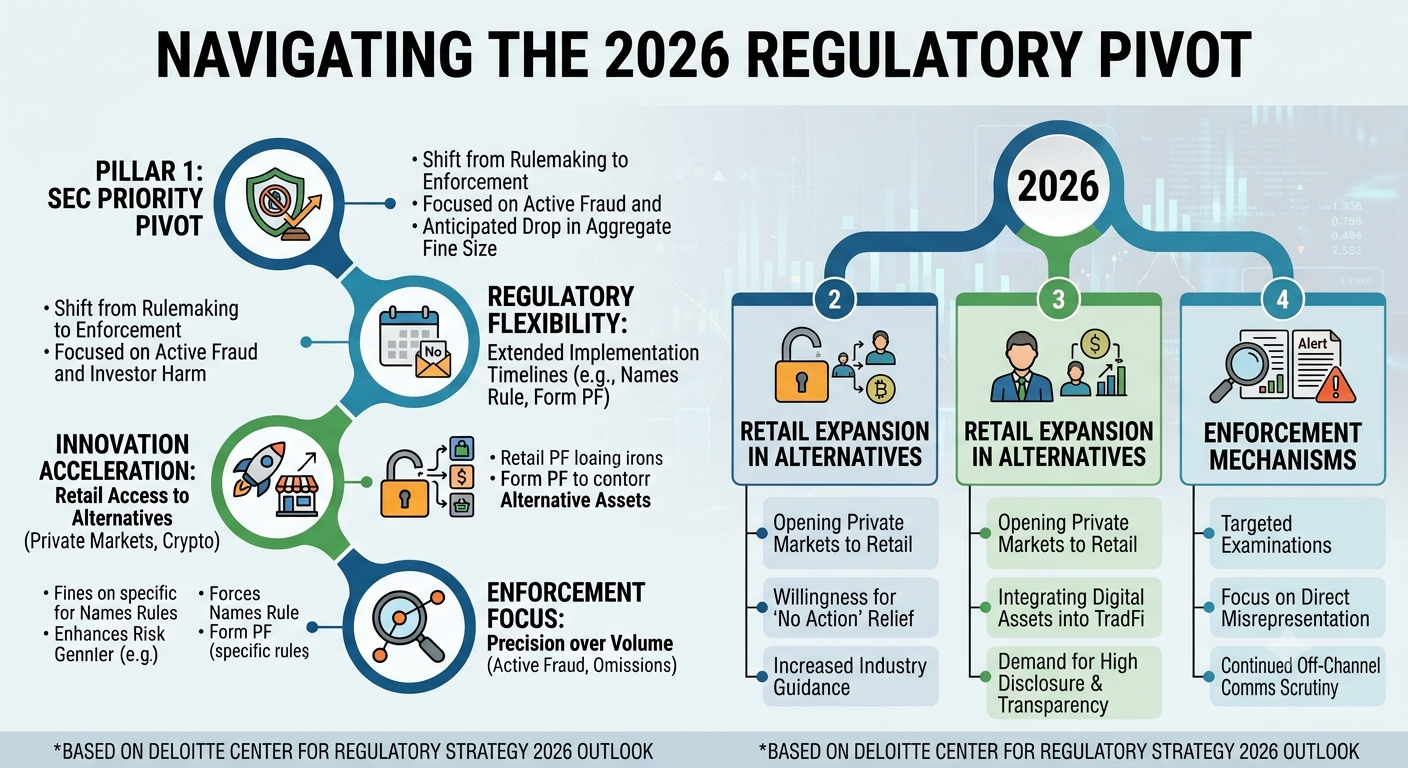
In 2026, the regulatory climate is marked by a dual approach of flexibility in timelines and strict enforcement in cases of active fraud. While previous years focused heavily on broad rulemaking, the current SEC leadership is prioritizing targeted enforcement of clear-cut investor harm.
-
Compliance Timeline Relief: The SEC has provided firms with extended implementation windows for complex rules, including the Names Rule amendments and updated Form PF reporting guidelines. This relief allows firms to build robust data collection systems rather than rushing compliance processes.
-
Refined Enforcement Metrics: Average aggregate enforcement fines are projected to decrease compared to previous highs. However, examinations are more focused. Firms must avoid complacency, as the regulator is actively targeting actual fraud, misrepresentation, and conflicts of interest.
-
Proactive Guidance Pathways: The SEC is showing a greater willingness to offer “no action” letters and informal guidance to clarify rules, lowering the compliance burden for firms that proactively engage with the agency.
Driving Retail Expansion into Alternative Assets
A major trend in 2026 is the expansion of retail investor access to alternative and private market investments. Regulators are establishing clear rules of the road, facilitating access while demanding clear disclosure.
-
Private Market Accessibility: Regulatory tailwinds are opening access to private credit, real estate, and private equity vehicles for a broader pool of retail investors, shifting products away from strictly institutional distribution.
-
Integration of Digital Assets: Clearer guidelines for digital assets are allowing traditional managers to launch diversified, crypto-exposed investment vehicles with reduced fear of retroactively applied enforcement.
-
Disclosures and Liquidity Management: As retail investors enter these historically illiquid spaces, compliance teams must ensure marketing materials, liquidity disclosures, and fee structures are exceptionally transparent.
Operational Impact of 2026 Regulatory Reforms
Firms must restructure several compliance and operational workflows to align with the current regulatory environment. The table below outlines key regulatory mandates, implementation timelines, and required compliance adjustments.
| Regulatory Focus | Primary Requirement | Compliance Strategy & Impact |
| Names Rule Amendments | Fund names must accurately reflect portfolio holdings (80% investment policy requirement). | Standardized automated daily portfolio monitoring to prevent drift. |
| Form PF Updates | Enhanced reporting on private fund leverage, strategies, and counterparty exposures. | Centralized data lakes to integrate risk metrics across different fund types. |
| Off-Channel Communications | Prevention and archiving of business communications on unapproved platforms. | Implementation of strict mobile device management (MDM) and archiving. |
| Fiduciary Duty & Conflict Disclosure | Transparent fee structures and elimination of structural conflicts of interest. | Comprehensive annual reviews of vendor relationships and revenue-sharing. |
Strategic Action Items for Compliance Leaders
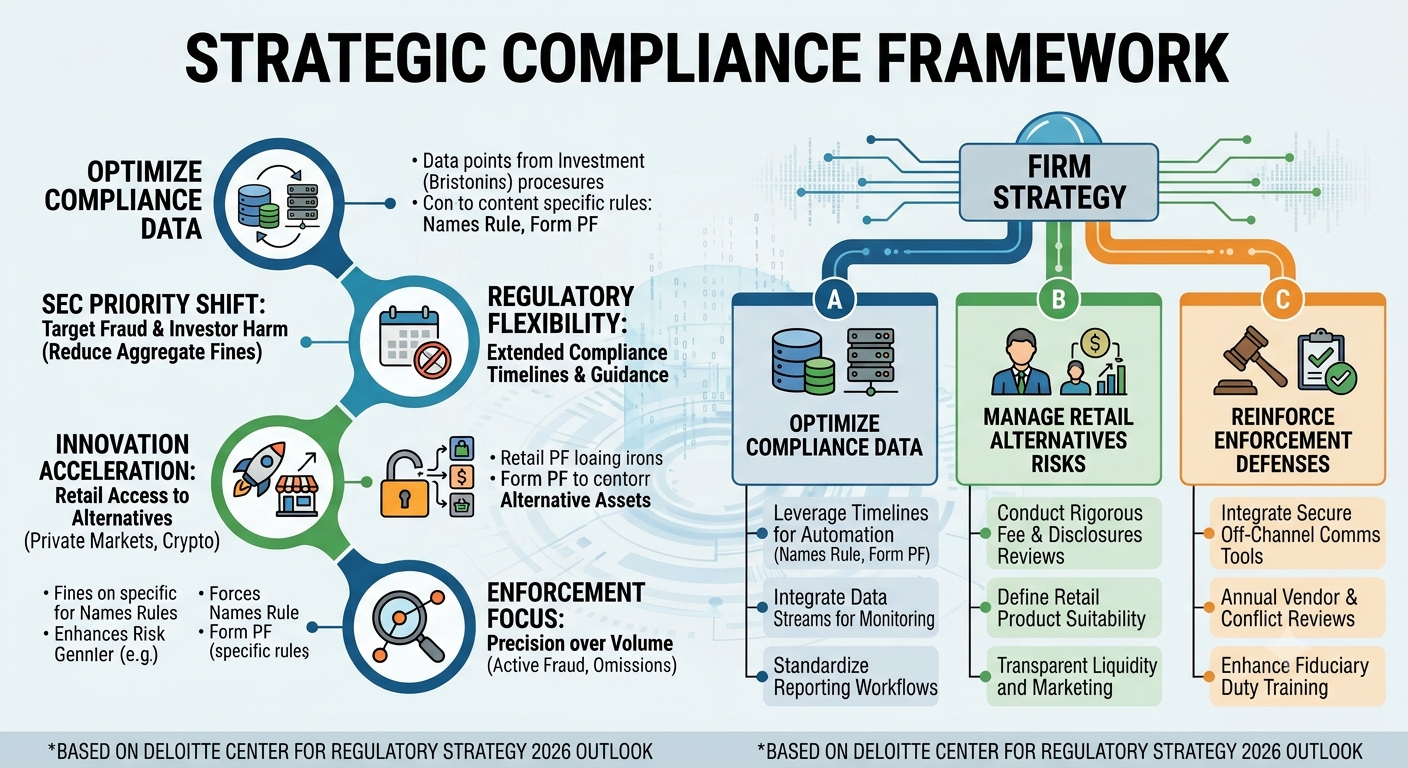
To navigate this landscape successfully, asset managers should focus on three core areas:
-
Optimize Compliance Data Infrastructure: Use the extended implementation timelines to build automated compliance monitoring systems rather than manual tracking sheets. This is particularly crucial for maintaining the 80% asset-allocation thresholds mandated by the Names Rule.
-
Review Retail Product Disclosures: If launching alternative or private market vehicles aimed at retail clients, conduct detailed reviews of fee transparency, liquidity limits, and risk disclosures to prevent accusations of misleading marketing.
-
Formalize Off-Channel Communication Controls: Secure communication platforms must be integrated into daily operations. Regulators continue to focus on the unauthorized use of personal messaging apps for business operations.
FAQs
What is the primary focus of SEC Chair Paul Atkins in 2026?
The current SEC leadership has shifted resources to focus primarily on clear investor harm, active fraud, and structural conflicts of interest, rather than pursuing broad, aggressive rulemaking and high aggregate fines.
How are alternative assets changing for retail investors in 2026?
Regulators are providing paths for retail investors to participate in private markets, private credit, and digital assets. This shift requires fund managers to carefully manage and explain the liquidity risks of these products to a non-institutional audience.
Why are compliance teams getting more time to implement rules?
The SEC has shown increased regulatory flexibility by extending compliance deadlines for rules like the Names Rule and Form PF. This approach allows firms to build better, more integrated data infrastructures for compliance reporting.
For detailed coverage of these developments, read the official Deloitte 2026 Investment Management Regulatory Outlook.